
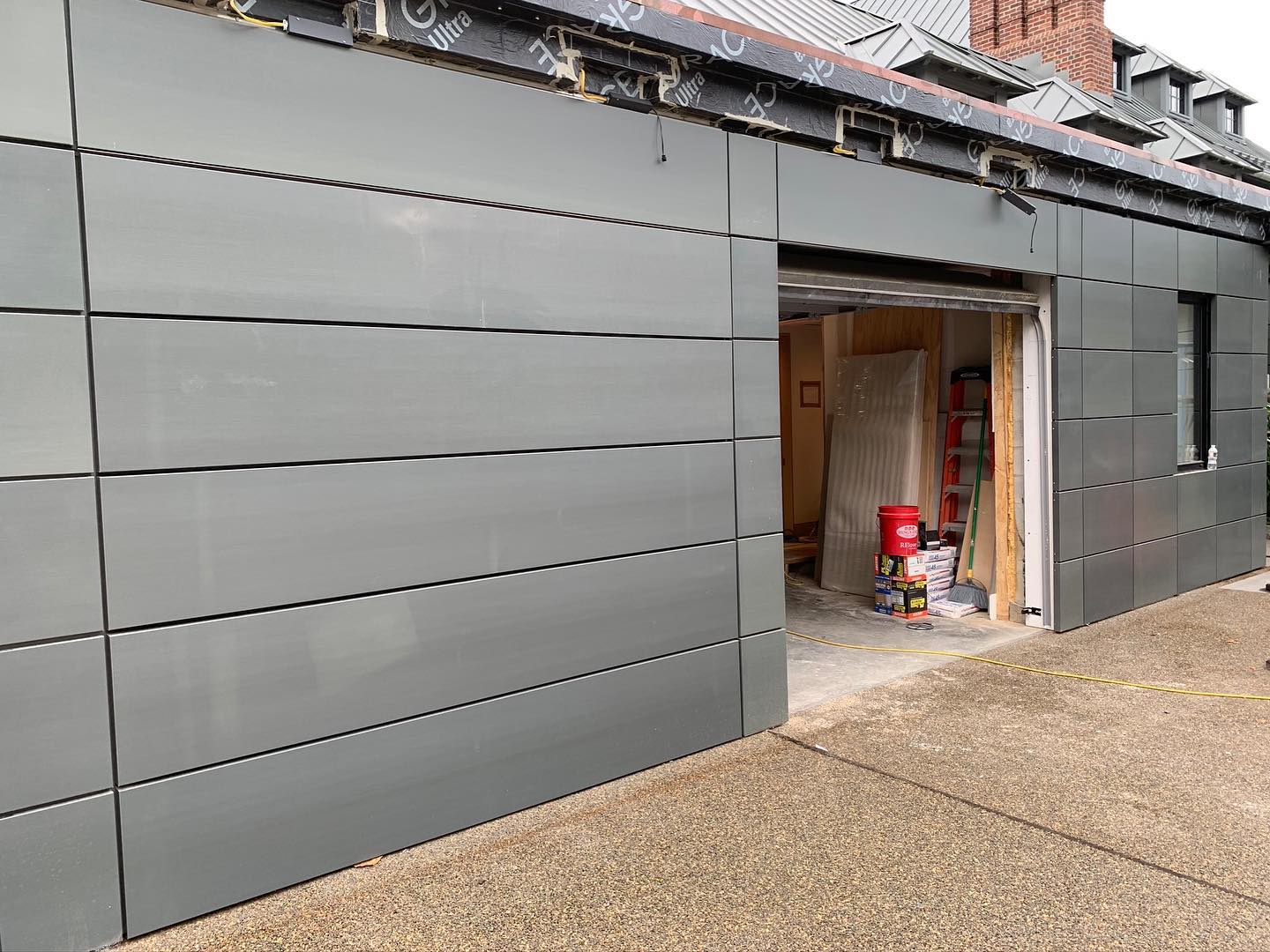
Flush-mount garage doors are often selected for their clean exterior appearance, yet the decision involves tradeoffs that extend beyond visual preference alone. Differences in mounting style influence structural tolerance, panel stress, service accessibility, and long-term reliability in ways that may not be immediately apparent after installation.
Evaluating the pros and cons of Flush Mount systems compared to standard mount configurations requires examining performance behavior, maintenance demands, and repair implications rather than relying on design trends. Reviewing photos alongside technical considerations helps provide a balanced assessment and clarifies how mounting choices affect system outcomes over time.
Flush-mount garage doors offer aesthetic and architectural benefits that appeal to homeowners seeking seamless exterior integration. These advantages depend on precise installation and stable structural conditions.
Understanding these benefits helps determine whether they align with long-term performance expectations.
Find out how standard mount and Flush Mount Garage Doors differ in structure, installation, and overall appearance by reading: What Is The Difference Between Standard Mount and Flush Mount?
Flush mount systems deliver a streamlined appearance that complements modern design principles. Panels sit close to the wall plane, creating a unified exterior surface that blends with surrounding materials.
These visual benefits remain most effective when structural conditions support consistent alignment over time.
Explore the key advantages and drawbacks of choosing a Flush Mount Garage Door compared to a standard mount, including design impact and installation needs, by reading: What Is a Flush Mount Garage Door and How Does It Differ From a Standard Mount System?
Flush mounting allows doors to integrate seamlessly into architectural designs that emphasize flat planes and reduced visual clutter. These benefits appeal primarily in new construction or carefully prepared renovations.
Professional evaluation ensures that design goals do not compromise operational reliability.
Learn when a Flush Mount Garage Door is the better option based on your home’s style, layout, and long-term goals by reading: When to Choose a Flush Mount Garage Door Instead of a Standard Mount for Your Home.
While Flush Mount systems offer aesthetic appeal, they introduce structural and service limitations that require careful consideration. These limitations often emerge gradually through alignment sensitivity and maintenance complexity.
Understanding these drawbacks helps prevent unexpected long-term challenges.
Flush-mount systems rely on precise geometry to maintain alignment. Even minor structural movement can affect tracking behavior and sealing consistency.
These sensitivities increase the importance of professional installation and periodic evaluation.
Service work on Flush Mount systems often requires additional time and care to preserve appearance and alignment. Repairs that would be routine under standard mount systems may involve greater complexity.
These challenges influence long-term maintenance planning and service cost expectations.
Standard mount systems prioritize functional reliability and service accessibility, making them a practical choice for many residential environments. These benefits often become more apparent over the system’s lifespan.
Evaluating standard mount advantages provides context for comparison.
Standard mount systems allow panels to move with fewer constraints, which reduces concentrated stress and supports long-term durability. Across many areas served, this flexibility helps maintain smooth operation even as homes age.
Operational reliability often remains stable with routine maintenance rather than frequent adjustment.
Service accessibility is a major advantage of standard-mount systems, particularly when repairs or panel replacement are necessary. Technicians can work efficiently without disturbing surrounding finishes.
This practicality often translates into lower cumulative maintenance effort and expense.
Despite their reliability, standard mount systems involve visual and spatial tradeoffs that may not align with certain design preferences. Understanding these limitations helps balance expectations.
Limitations tend to relate more to appearance than performance.
Standard mount systems prioritize function over architectural concealment. While appearance remains consistent, it may not match contemporary design goals that emphasize flush surfaces.
Visual preferences should be weighed against performance priorities.
Interior space considerations may influence mounting style selection, particularly in garages designed as finished or multi-use spaces.
Mounting style significantly affects how garage door panel replacement and repair are approached. Access, alignment tolerance, and panel compatibility influence repair outcomes.
Understanding these implications supports informed decision-making.
Flush-mount systems require replacement panels to match the original specifications closely. Even small deviations can affect movement and sealing.
These requirements influence both the feasibility and the cost of panel replacement over time.
Standard mount systems make panel replacement easier, supporting long-term service flexibility.
As outlined in a comprehensive guide to garage door maintenance, garage door panel repair remains practical under standard mounting when compatibility is maintained.
Mounting style affects both initial installation cost and long-term service expenses. These differences shape overall ownership considerations.
Evaluating cost across the system lifespan provides a clearer perspective.
Flush-mount systems often involve a higher total cost due to complexity rather than material quality alone. These costs reflect the precision required to maintain alignment and appearance.
Standard mount systems benefit from widespread industry familiarity, supporting cost stability and service efficiency.
Environmental conditions and structural characteristics influence how each mounting style performs over time. Selecting a style aligned with these factors supports reliability.
Professional evaluation helps identify suitability.
Flush-mount systems perform best under stable conditions with consistent care and maintenance.
Standard mount systems offer resilience across broader environmental and structural conditions.
Choosing between Flush Mount and standard mount systems requires balancing visual preference with operational reliability, service accessibility, and cost considerations. Neither option suits every home equally.
Understanding pros and cons helps prevent decisions driven solely by appearance trends.
Professional evaluation ensures that mounting choices align with structural realities and long-term performance expectations. Viewing mounting style as a functional decision rather than a purely aesthetic one supports dependable operation.
Mounting style influences panel stress, service complexity, replacement feasibility, and cost in interconnected ways. Recognizing these relationships helps guide thoughtful system selection.
Professional insight supports decisions that preserve reliability, manage maintenance demands, and align with long-term ownership goals. Selecting the appropriate mounting style establishes a foundation for consistent performance and manageable service needs over time.
Flush Mount Door Co provides custom flush panel garage doors engineered to blend seamlessly into modern architectural designs. A hands-on manufacturing process prioritizes quality, collaboration, and design integrity from start to finish. Each door reflects a balance of innovation and craftsmanship, transforming function into architectural form.
Contact us today or give us a call to create a seamless garage door solution.
The biggest advantage of a flush-mount garage door is its clean, seamless appearance. We often see flush-mount designs blend seamlessly with the exterior wall, creating a modern and refined look. This style enhances architectural consistency, especially on contemporary homes.
Standard mount garage doors add depth and dimension to the exterior façade. We frequently see visible trim, panel edges, and shadow lines that complement traditional home designs. This style works well when decorative details are part of the overall aesthetic.
Flush-mount garage doors typically require more precise construction and installation. We often see higher costs due to custom sizing, tighter tolerances, and additional labor. Improper installation can also lead to alignment or clearance issues if not handled professionally.
Yes, standard mount doors are generally more forgiving during installation. We frequently see them adapt well to a wider range of existing garage openings and framing conditions. This flexibility can reduce installation time and overall cost.
Flush Mount Garage Doors usually cost more than standard mount options. We often see higher pricing due to custom materials, architectural finishes, and increased labor requirements. Standard mount doors are typically more budget-friendly and widely available.
When installed correctly, flush-mount doors perform just as reliably as standard-mount doors. We often see performance issues only when clearance or alignment is overlooked. Professional installation is critical to maintaining smooth operation over time.
Maintenance requirements are similar for both mounting styles when properly installed. We frequently see flush-mount doors that need closer attention to alignment and sealing. Standard-mount doors tend to be easier to adjust when minor shifts occur.
Standard-mount doors generally offer greater flexibility for future modifications. We often see easier upgrades to hardware, insulation, or decorative elements. Flush-mount doors can be more limited due to custom design constraints.
Flush-mount doors typically enhance modern and minimalist architecture. We frequently see standard mount doors better complement traditional or transitional homes. Matching the door style to the home’s design is key to maximizing curb appeal.
Homeowners should consider architectural style, budget, and installation complexity. We often recommend balancing visual goals with practical considerations. A professional consultation helps determine which option delivers the best long-term value.