
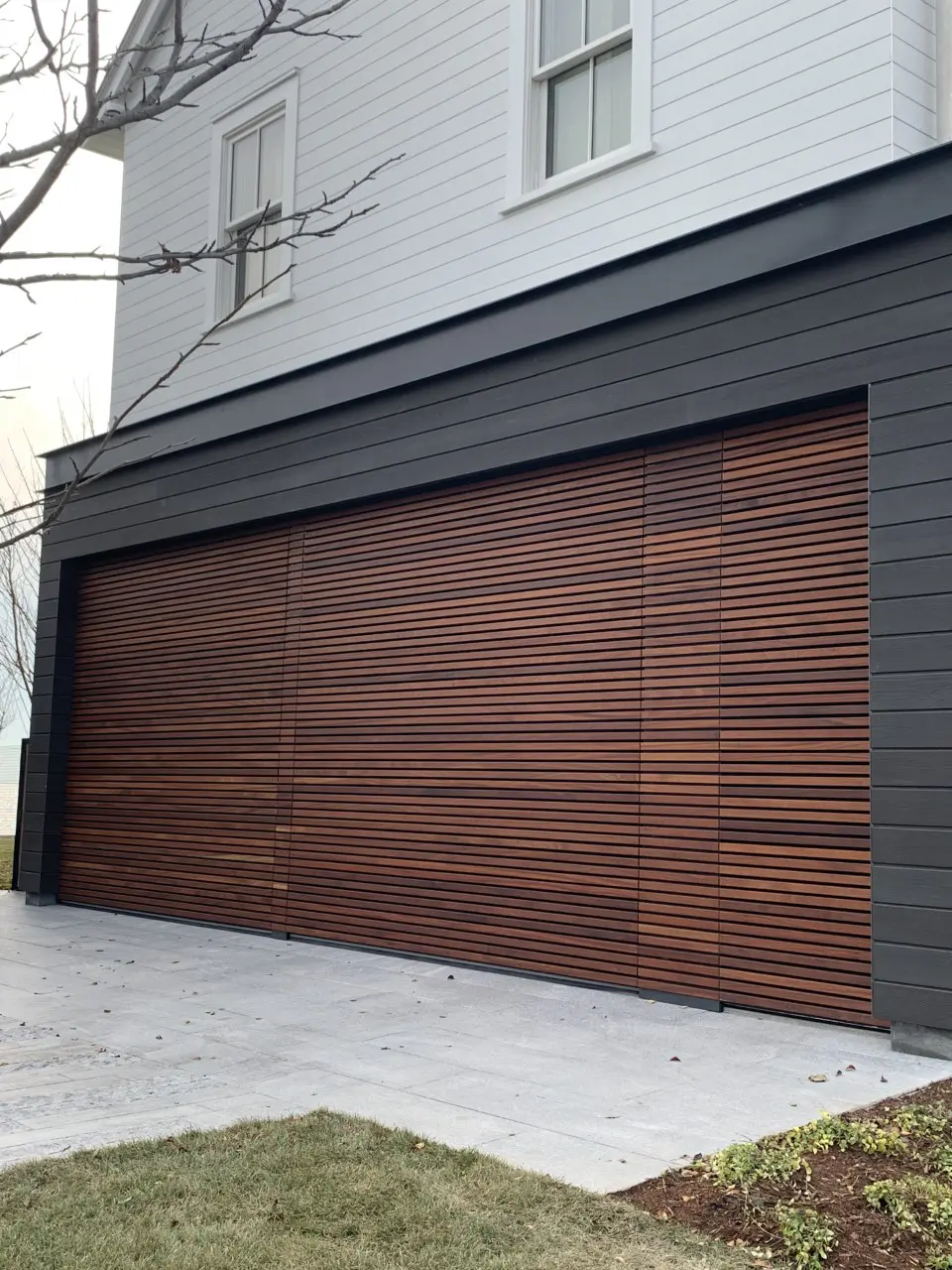
Flush Mount Garage Doors are generally worth it for energy efficiency because their flat panel construction allows for consistent foam-core insulation across the entire surface, without the thinner spots that raised panels and seams create on standard doors. This tends to translate into steadier garage temperatures, lower strain on an attached HVAC system, and better performance on both R-value and U-factor ratings, no matter which of our areas we serve you’re in. Four specific benefits make up most of that advantage, though the exact numbers still depend on the specific door’s construction.
Factor | Standard Raised-Panel Door | Flush Mount Door |
Insulation consistency | Can thin at seams and grooves | Consistent across the flat surface |
Typical R-value range | Varies widely by model | Comparable or higher depending on construction |
Temperature stability | More fluctuation in attached garages | Steadier temperatures overall |
Noise dampening | Moderate | Often stronger due to solid core |
Potential tax incentives | Depends on the specific model | Depends on the specific model |
Standard raised-panel doors are built from sections with grooves and seams, and insulation thickness can vary at those points, creating small weak spots for heat transfer. A Flush Mount Door’s flat surface avoids that irregularity, since the foam core runs consistently from edge to edge without interruption.
This same flat construction is also part of what makes the door read as a design upgrade rather than a purely functional purchase; if resale value is part of your decision, read Do Flush Mount Garage Doors Increase Your Home’s Resale Value? 5 Ways They Pay Off for the full breakdown.
A few things determine how much that consistency actually matters:
Check whether your garage shares a wall with a living space, a bedroom, laundry room, or home office are common examples. The more that space depends on stable temperatures, the more a consistently insulated door tends to matter.

An attached garage with a poorly insulated door can pull heat out of adjoining rooms in winter and let it in during summer, forcing your HVAC system to work harder to compensate.
Over a full year, that extra strain shows up as higher utility bills and, in some cases, a shorter working life for the HVAC equipment itself. Improving insulation here is one of the more cost-effective ways to shore up a home’s overall energy performance; the U.S. Department of Energy’s guidance on insulation and energy-efficient home improvements explains what qualifies for potential savings and incentives.
Pay attention to whether rooms next to the garage feel noticeably colder or warmer than the rest of the house during extreme weather. That temperature gap is often a sign the garage door itself is the weak point in the insulation chain, particularly if the rest of the home has already been updated with newer windows or added insulation elsewhere.
A few other clues are worth watching for as well:
A Flush Mount Door’s flat construction makes consistent insulation easier to achieve, but the actual R-value or U-factor still depends on the specific core material and thickness used. Not every Flush Mount Door is insulated the same way, so the style itself is only part of the equation, and two doors that look identical from the curb can perform very differently once you compare their actual specifications.
If you’re weighing this against the upfront cost more broadly, read Are Flush Mount Garage Doors Worth the Investment? for the full financial picture.
Ask for the actual R-value or U-factor rating rather than assuming “insulated” means the same performance across every product. Two Flush Mount Doors can look identical from the street and still perform very differently once you compare the specs directly.

A single season of improved insulation rarely justifies a garage door’s full price on its own, but the savings add up meaningfully over five, ten, or more years of ownership, especially once you factor in reduced strain on your HVAC system alongside the direct energy savings.
Insulation performance also varies across door types generally, not just between Flush Mount and standard; Family Handyman’s breakdown of garage door types explains how material and build affect thermal performance across the wider market.
For a direct comparison of Flush Mount against standard doors on long-term value specifically, read Flush Mount vs. Standard Garage Doors: Which Offers Better Long-Term Value? 6 Key Differences.
Think in terms of years of ownership rather than a single utility bill. The longer you plan to stay in the home, the more the insulation advantage of a Flush Mount Door tends to offset its higher upfront price, and that math only improves the longer your ownership timeline stretches out.
A Flush Mount Door’s insulation advantage isn’t dramatic in any single month, but it adds up steadily across years of ownership, particularly for attached garages and homes in climates with real seasonal swings. That slow, compounding benefit is often the more honest way to think about the payoff, rather than expecting it to show up all at once on a utility bill the first winter after installation.
Flush Mount Door Co. can help you compare actual insulation specs across door options for your specific garage and climate. Contact us or give us a call to talk through what would make the most sense for your home.