
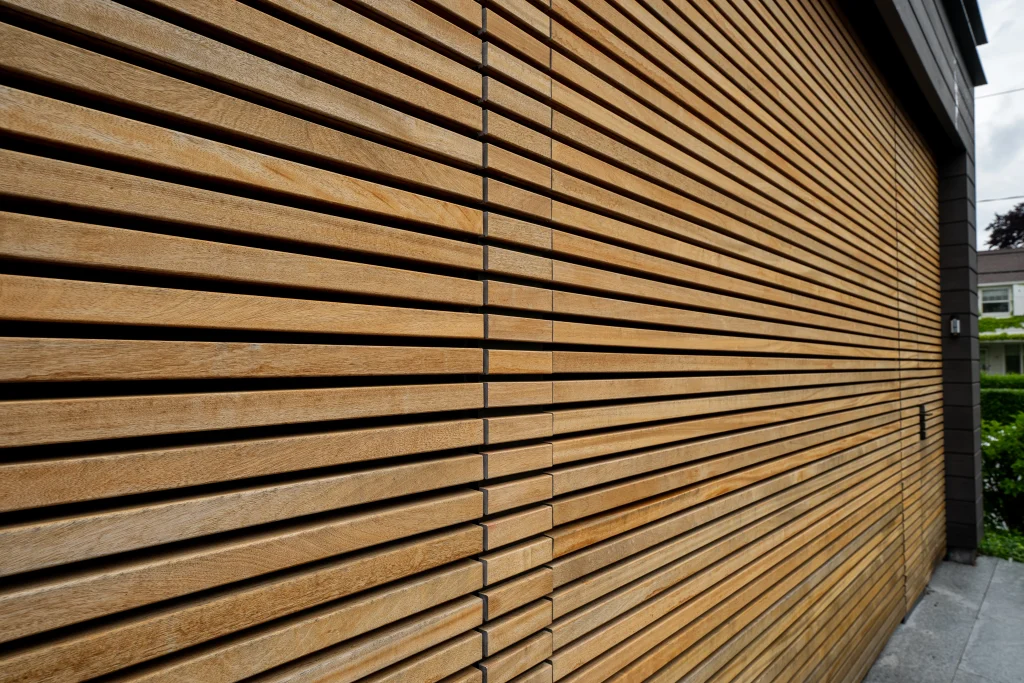
Composite Flush Mount Garage Doors generally insulate as well as, or slightly better than, foam-core insulated steel, and clearly outperform solid wood without an added backer. Composite typically reaches R-values in the 12 to 20+ range, on par with insulated steel, while also resisting the dents and corrosion that can affect steel over time. For homeowners deciding between the two highest-performing materials, the choice usually comes down to climate rather than raw insulation numbers. Checking out photos of Flush Mount Doors in composite finishes can help you see how closely they mimic wood grain or match steel’s clean look before making that final call.
Read Which Flush Mount Garage Door Material Insulates Best? 6 Options Ranked by R-Value for how composite stacks up against all six Flush Mount options.

Material | Typical R-Value | Insulation Stability Over Time | Best Climate Fit |
Insulated composite | 12 to 20+ | Excellent, resists seal degradation | Coastal, humid, or mixed climates |
Insulated steel (foam-core) | 12 to 20+ | Good, needs coating upkeep | Cold, dry climates |
Solid wood, no backer | 2 to 6 | Fair, depends on sealing | Mild climates, appearance-first |
Solid wood with foam backer | 6 to 14 | Fair to good, depends on backer quality | Moderate to cold climates wanting wood look |
Reading this table side by side, the starting R-value gap between composite and insulated steel is small to nonexistent; the meaningful difference appears years later in how well each material maintains that rating. Wood, by contrast, needs an added step (the backer) just to get into the same conversation as the other two.
Composite doors use a foam core wrapped in a fiberglass or composite skin, the same basic approach as foam-core steel, just with a different exterior material. That means composite typically lands in the same 12 to 20+ R-value range as insulated steel, well above solid wood’s 2 to 6 range without a backer. The insulation mechanism is nearly identical to steel, so the real difference between the two comes down to the skin, not the core.
Ask for the manufacturer’s stated R-value for the specific core thickness and fill type, the same way you would for insulated steel, since “composite” alone doesn’t guarantee a specific R-value without knowing the core spec.
The composite or fiberglass skin itself isn’t what insulates; the foam core underneath does that work, same as with steel. What the composite skin adds is protection for that core: it resists impacts, moisture, and corrosion better than bare or painted steel, which helps the foam core’s seal stay intact for longer. Think of the skin as the core’s long-term protector rather than an insulating layer in its own right.
If the skin cracks or separates from the core over time, the insulation seal can be compromised even if the foam itself is intact, so skin durability is part of the insulation story, not just a cosmetic feature. This is why we recommend checking seam integrity during any routine inspection, rather than assuming the door’s insulation performance is fixed once it’s installed.
Solid wood without a backer relies on the wood itself for insulation, which caps out well below foam-core performance. Composite, by contrast, gets its insulation entirely from an internal foam core, the same mechanism as insulated steel, so it isn’t limited by what the surface material alone can do the way solid wood is. This is the core reason composite and wood aren’t really comparable on insulation unless wood gets the same kind of internal foam layer added.
For additional care guidance that applies across composite and other materials, the International Door Association’s care and maintenance resources are a solid reference point for homeowners comparing long-term upkeep.
If you want the reliability of a known R-value without relying on an added backer holding up over time, composite is generally the more predictable choice; if the wood look specifically matters more than R-value certainty, a well-built wood-with-backer door can still work, provided the backer is specified correctly from the start.
Because composite resists corrosion and dents better than steel, and expands and contracts less than metal through temperature swings, its insulation seal tends to hold up well over many years. This is part of why composite performs particularly well in coastal or humid climates, where bare steel would need more maintenance to preserve the same seal integrity. Over a 10 to 15-year span, this durability advantage often matters more than the small differences in starting R-value between the two materials.
Less expansion and contraction at the seams, combined with a corrosion-resistant skin, means fewer small gaps forming at the door’s edges over time compared to a steel door with a compromised coating. In practice, this is the difference between a door that still performs close to its original rating after a decade and one that has quietly lost some of its insulation value along the way.
If your priority is a wood look specifically, read Is Wood Actually Warmer? How Wood Flush Mount Garage Doors Perform for Insulation for what it takes to get wood closer to composite’s performance.
In coastal, humid, or salt-heavy environments specifically, composite can outperform insulated steel over the long run, not because the core insulates differently, but because the skin holds its seal integrity longer in those conditions. In a dry, inland climate, insulated steel and composite typically perform very similarly, and the choice often comes down to cost, weight, or finish preference rather than raw insulation performance.
Not always; in a mild, dry, inland climate, insulated steel performs about the same and may cost less; composite’s advantage shows up most clearly in coastal or humid conditions where its corrosion resistance protects the insulation seal over time.
If you want a broader inspection checklist to pair with the material-specific insulation notes above, Angi’s guide on how to inspect and maintain your garage door covers general upkeep steps that apply across materials.
For how composite compares to steel and aluminum on factors beyond insulation, read Steel vs. Aluminum Flush Mount Garage Doors: 7 Differences That Matter.

If you want foam-core level insulation with less long-term maintenance around corrosion, composite is a strong pick, especially in coastal or humid regions.
Flush Mount Door Co. fabricates composite Flush Mount Doors with foam-core specs matched to your climate. Contact us or give us a call to request a free quote, and we’ll help you compare composite against steel or wood for your specific home, including a realistic look at long-term performance for your exact location.