
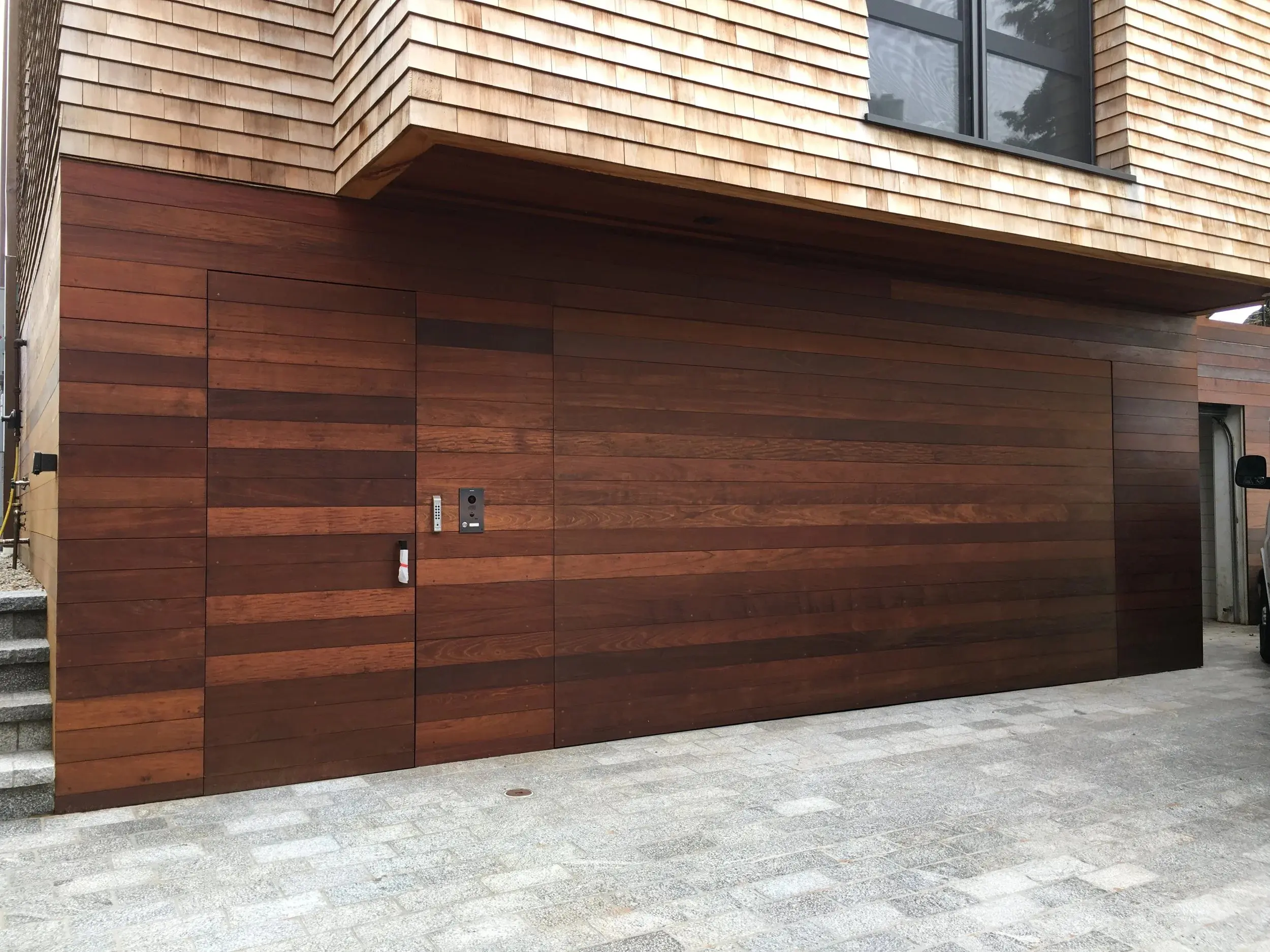
Flush-mount garage doors have become increasingly prevalent in modern residential design, yet their functional differences from standard-mount systems remain widely misunderstood. While exterior appearance often drives interest, the underlying installation method influences alignment tolerance, panel stress, and long-term system reliability in ways that are not immediately visible.
Understanding how a flush-mount garage door differs from a standard mount system requires examining structural integration, panel behavior, and service implications rather than focusing solely on aesthetics. Reviewing photos alongside technical explanations helps illustrate how these differences shape door performance over time, especially when maintenance, adjustment, or garage door panel replacement becomes necessary.
A flush-mount garage door is installed so the door panels sit nearly level with the exterior wall surface, creating a smooth visual transition between the door and the surrounding façade. This configuration differs fundamentally from standard mount systems, which position the door slightly forward of the wall opening.
Flush mounting places greater demands on precision during installation and ongoing system stability.
Find out how standard mount and Flush Mount Garage Doors differ in design, installation, and overall appearance by reading: What Is The Difference Between Standard Mount and Flush Mount?
Flush-mount construction relies on consistent wall geometry to maintain alignment throughout daily operations. Even minor shifts in framing can affect how panels track, seal, and respond to temperature changes.
A professional evaluation before installation determines whether the structure can support this configuration without introducing long-term performance issues.
Explore the benefits and potential drawbacks of choosing a Flush Mount Garage Door versus a standard mount, including style, cost, and construction considerations, by reading: Pros and Cons of Choosing a Flush Mount Garage Door Compared to a Standard Mount.
Panel positioning affects how force transfers through hinges, rollers, and tracks. Flush-mount systems demand consistency across all panels to prevent uneven stress and premature wear.
These characteristics influence future service decisions, including planning for garage door panel repair and replacement.
Learn when selecting a Flush Mount Garage Door makes more sense than a standard mount based on your home’s architecture and design goals by reading: When to Choose a Flush Mount Garage Door Instead of a Standard Mount for Your Home.
Standard mount garage door systems serve as the baseline for comparison, offering greater flexibility in installation and maintenance. Across many areas served, this configuration places panels slightly forward of the opening, allowing for more forgiving alignment and easier service access.
Differences between mounting styles become clearer when viewed through functional performance rather than appearance alone.
Standard mount systems distribute operational forces through exposed hardware, allowing components to move with fewer constraints. This flexibility supports consistent operation even as homes settle or framing shifts over time.
Because tolerances are wider, standard mount systems remain more forgiving over the long term.
Movement behavior under standard mount configurations reduces concentrated stress points, which supports durability and easier maintenance.
These characteristics often translate into lower cumulative service effort over the system’s lifespan.
Installation requirements differ significantly between flush-mount and standard-mount systems, affecting labor complexity, preparation requirements, and long-term reliability.
Flush-mount systems demand higher precision from the outset.
Flush-mount installation requires stable structural conditions to succeed in the long term. Minor deviations that remain acceptable under standard mount configurations can create alignment challenges under Flush Mounting.
These demands influence both installation time and future service complexity.
Standard mount systems allow installers to adapt to real-world conditions more easily, which supports predictable outcomes even in older homes.
This flexibility often reduces installation risk and long-term adjustment needs.
Mounting style directly affects how stress accumulates within door panels over time. These stress patterns influence warping, cracking, and insulation performance.
Understanding stress behavior helps clarify durability expectations.
Flush-mount systems amplify the effects of panel inconsistencies, making precise manufacturing and matching essential. Even minor deviations can influence movement and sealing performance.
These factors directly affect garage door panel replacement cost when replacements become necessary.
Standard mount systems mitigate concentrated stress, supporting longer panel life and more predictable performance.
This resilience often simplifies long-term repair and replacement planning.
Service accessibility and maintenance complexity vary significantly between flush-mount and standard-mount systems. These differences influence how repairs affect appearance, alignment, and reliability.
Professional evaluation should consider service implications early.
Flush-mount systems require careful service to avoid disrupting alignment or the exterior appearance. Automatic garage door standards influence service procedures, and repairs often take longer due to tighter tolerances and access limitations.
These factors influence long-term service planning and cost expectations.
Standard mount systems support efficient service workflows, which help control long-term maintenance effort and cost.
This practicality often aligns with reliability-focused ownership priorities.
Mounting style influences both initial installation expense and ongoing service costs, especially when repairs or panel replacement become necessary.
Understanding these cost patterns helps align expectations.
Flush-mount systems may carry higher cumulative costs due to complexity rather than material quality alone. The code of federal regulations reinforces the level of precision required to maintain proper alignment, safety, and exterior appearance over time.
Standard mount systems benefit from widespread industry familiarity, supporting cost predictability across installation and service.
Selecting a mounting style requires balancing aesthetic goals with structural suitability and long-term performance considerations. No mounting style suits every environment equally.
Professional assessment provides clarity.
Flush-mount systems perform best under controlled conditions with consistent professional support.
Standard mount systems offer resilience and flexibility across broader conditions.
Flush-mount and standard-mount systems differ significantly in structural demands, stress behavior, and service implications. Understanding these differences helps prevent decisions driven solely by appearance.
Professional evaluation ensures that mounting style aligns with construction conditions, maintenance expectations, and future repair planning. Viewing the garage door as an integrated system supports dependable operation and consistent performance over time.
Thoughtful mounting choices establish a foundation for reliability, manageable service needs, and sustained system confidence well beyond installation.
Flush Mount Door Co specializes in precision-built flush garage doors designed to become part of the architecture itself. Leadership-driven oversight ensures design consistency, client collaboration, and high production standards at every stage. Innovative, modern solutions are combined with timeless craftsmanship to deliver doors that elevate the structure as a whole.
Contact us today or give us a call to start your custom flush door project.
A flush-mount garage door is installed so the door sits level with the exterior wall when closed. We often see this create a clean, seamless appearance that blends into the home’s façade. The door appears integrated into the architecture rather than layered over the opening.
A standard mount garage door is installed so the door sits slightly in front of the garage opening. We frequently see visible trim, framing, or panel depth once the door is closed. This traditional mounting style creates more visual separation between the door and the exterior wall.
Flush-mount doors create a smooth, modern look with minimal shadows or depth. We often see standard mount doors add dimension through visible panel edges and trim details. The difference is mostly aesthetic, but it strongly influences curb appeal.
Flush-mount doors complement clean lines, flat surfaces, and minimalist architecture. We frequently see them used in contemporary homes where visual simplicity is a priority. The door becomes part of the exterior design rather than a focal point.
Yes, Flush Mount systems require tighter tolerances and careful framing. We often see installers account for wall depth, clearances, and alignment more carefully. Precision is essential to ensure the door operates smoothly while maintaining a flush appearance.
Standard mount installations are generally simpler and more forgiving. We frequently see Flush Mount installations take longer due to alignment, finish work, and structural considerations. Proper installation is critical to avoid performance issues with Flush Mount Doors.
When installed correctly, flush-mount doors perform just as reliably as standard-mount doors. We often see issues only when clearances or alignment are overlooked. Professional installation ensures smooth operation regardless of mounting style.
Flush-mount garage doors often cost more due to custom sizing, materials, and installation labor. We frequently see higher pricing compared to standard mount systems. The added cost reflects the design precision and architectural impact.
Standard mount garage doors typically suit traditional and classic home styles better. We often see them paired with raised panels, decorative hardware, and trim details. Flush-mount doors are usually chosen for modern or contemporary designs.
The decision depends on architectural style, budget, and desired visual outcome. We often recommend considering both aesthetics and structural requirements. A professional evaluation helps determine which mounting style best fits the home and long-term goals.