
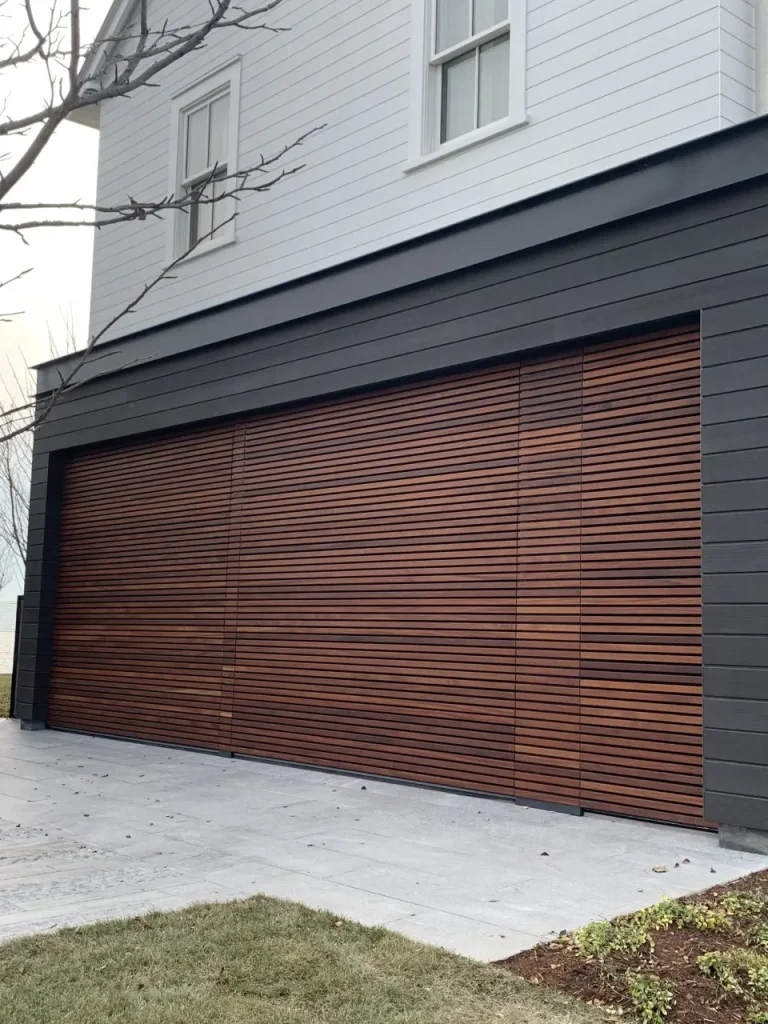
If you have ever driven through a neighborhood and stopped to admire a home that looks different, cleaner, and more intentional, there is a good chance it had a Flush Mount Garage Door. These doors sit flat against the exterior wall, with no visible raised panels, bulging tracks, or awkward trim lines breaking up the facade.
Modern Flush Mount Garage Doors blend directly into your home’s exterior finish. Whether wrapped in natural stone, finished with stucco, or accented with wood cladding, the door becomes part of the wall rather than competing with it. Browse any photos of Flush Mount Doors, and that seamless integration becomes immediately clear.
This guide covers how Flush Mount Doors interact with each exterior material, what to watch for during installation, and what to ask before you buy.

Before you order a door or start pulling permits, there are a few things every homeowner should understand about how these systems work, what makes them different, and where most installation mistakes happen. These seven points cover the essentials.
The most important decision you will make is not the door itself. It is the exterior finish surrounding it.
Stone, stucco, and wood each behave differently as cladding materials, and Flush Mount Doors need to be carefully integrated into each one. A door that looks clean against smooth stucco may look awkward if the stone around it is not properly framed. A wood-clad facade adds warmth and texture, but the door hardware and reveal lines need to match that natural feel.
Here is what makes each material unique when paired with a Flush Mount design:
Choosing the wrong door for your specific exterior finish is one of the most avoidable mistakes homeowners make. A professional assessment before installation can save you from a costly redo.
For a deeper look at how material choice affects your home’s overall appeal, Stone, Stucco, or Wood: Which Finish Suits Your Home Best? walks through the pros, cons, and design considerations for each option.
Standard garage doors use visible tracks, raised panels, and a traditional swing-out or roll mechanism that sits outside the wall plane. Flush mount doors are engineered to sit inside or flush with the opening, which means the hardware, springs, and support structure are hidden or recessed.
That difference affects a few key performance factors:
For homeowners researching why these doors work the way they do, understanding Why Flush Mount Garage Doors Elevate Any Home Exterior gives a useful breakdown of the structural benefits.
Stone is one of the most requested finishes for Flush Mount Garage Doors, and it is also one of the trickiest to do correctly. Real stone and manufactured stone veneer both add significant weight to a panel that is already heavy by design.
Before any stone application, the door panel must be reinforced to handle the load. The framing around the opening also needs to account for the thickness of the stone, so the finished surface still sits flush with the wall, not proud of it.
Common issues seen with stone Flush Mount applications include:
The fix for most of these problems is prevention. A properly detailed drawing from your installer showing the door, framing, veneer thickness, and waterproofing layer goes a long way toward avoiding problems after the door is already in.
Stucco is probably the most forgiving exterior material for Flush Mount integration, at least visually. A well-finished stucco wall with a flush door looks seamless, modern, and sharp. But stucco is also a rigid material that cracks under stress, and garage door openings are a natural stress point in any wall.
The area around the door frame expands and contracts with temperature changes. If your stucco was applied directly against the door frame without a proper control joint or backer rod, you will see cracks form over time. Those cracks are not just cosmetic. They allow water behind the stucco layer, which can cause bigger problems with the underlying structure.
What homeowners should check when inspecting their stucco around an existing or new Flush Mount Door:
Maintenance here does not require major work most of the time. Keeping the joint between the door frame and the stucco sealed is the most effective way to prevent larger issues.
According to This Old House’s guide to garage doors, proper sealing and regular inspection of door frames can significantly extend the life of any garage door installation, including Flush Mount systems.
Wood is the most visually striking finish you can pair with a Flush Mount Garage Door. The natural grain, the warmth it brings to a facade, and the way it ages gracefully make it a top choice for homeowners who want a home that feels handcrafted.
But wood requires more ongoing attention than stone or stucco. It absorbs moisture, swells in humid climates, and can warp or crack if the finish coat deteriorates. When wood is used as cladding on or around a Flush Mount Door, those characteristics directly affect door performance.
Here is what to watch for with wood-clad Flush Mount Doors:
One thing homeowners often overlook is that Flush Mount Garage Doors with different exterior finishes do not all have the same maintenance needs. Treating a wood-clad door the same as a stucco-surrounded one will lead to missed problems and premature wear.
Here is a general maintenance approach based on exterior material:
Stone:
Stucco:
Wood:
According to Angi’s guide on how to inspect and maintain your garage door, annual inspections by a qualified technician are one of the most effective ways to catch problems before they become expensive repairs.
The average cost of preventive maintenance is significantly lower than the average cost of a full door replacement. Staying on schedule saves money over time.

Flush Mount Garage Doors look simple. That clean, flat appearance gives the impression that there is not much going on behind the surface. In reality, these are complex systems that require precise framing, proper waterproofing, and calibrated spring tension to work correctly and safely.
The weight alone is a safety concern. Garage door springs store significant mechanical energy, and improper handling can cause serious injury. Beyond the physical risk, a poorly installed Flush Mount Door will almost always show problems within the first year, whether that is misalignment, air leaks, or water intrusion behind the cladding.
Choosing a qualified local installer who knows the areas we serve and understands your specific exterior material makes a significant difference in the final outcome.
Here is what to look for when choosing an installer:
When it comes to timing, understanding When to Upgrade Your Garage Door for Maximum Curb Appeal can help homeowners figure out the right season and stage of a renovation to plan an installation.

Choosing a modern Flush Mount Garage Door is not just a purchase. It is a design decision that affects how your entire home looks and performs. The material surrounding the door, whether stone, stucco, or wood, shapes every part of the process from framing to maintenance.
The best results come from working with a team that understands not just the door itself, but how it integrates with your specific exterior. That means asking the right questions before anything is ordered, reviewing the details before installation begins, and having a clear maintenance plan once the project is complete.
If you are ready to explore what a Flush Mount Garage Door could look like on your home, the team at Flush Mount Door Co. brings hands-on experience with all three exterior types and can walk you through options that fit your home’s design and your budget. Contact us or give us a call to schedule a consultation and get started.