
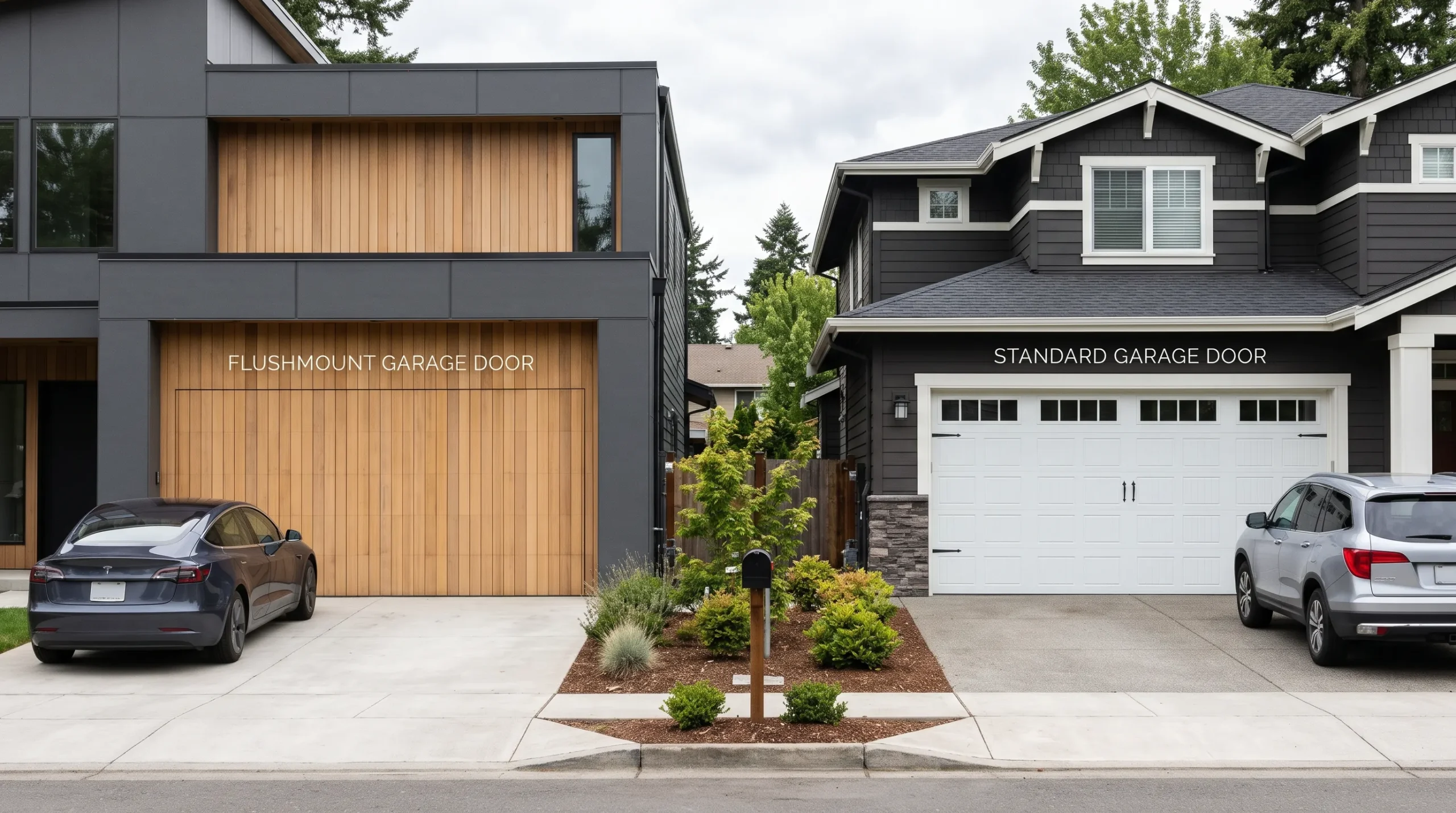
Flush Mount Garage Doors generally offer better long-term value than standard raised-panel doors because their flat surface resists visible wear, their insulation performs more consistently, and they typically need less cosmetic upkeep over a decade or more of ownership. Standard doors cost less upfront, which matters for buyers prioritizing initial budget over years of ownership, an important distinction across our areas we serve where climate and usage patterns vary. Six specific differences determine which style actually holds up better for your situation.
Factor | Flush Mount Door | Standard Raised-Panel Door |
Upfront cost | Higher | Lower |
Cosmetic wear over time | Resists dents and fading well | More visible wear at seams and panels |
Insulation consistency | Strong, uninterrupted core | Can vary at seams and grooves |
Repainting or touch-up frequency | Lower | Higher, especially on wood-look finishes |
Perceived style longevity | Stays current longer | Can look dated within 10 to 15 years |
Best fit for | Longer-term ownership | Lower upfront budget priority |

Flush mount doors use a flat panel design that eliminates the grooves and shadow lines found on standard raised-panel doors, which affects everything from appearance to how evenly insulation performs across the surface. The construction difference also shows up in how each door handles minor impacts, since a flat surface tends to distribute stress differently than a paneled one. Flush mount vs. standard mount garage door differences cover the construction details in more depth.
A few construction factors tend to matter most for long-term value:
Ask to see or feel a physical sample of each door style rather than relying on photos alone. The difference in surface texture and seam visibility is much clearer in person than in a listing image.
Standard doors, particularly wood or wood-look finishes, typically need repainting or staining every few years to stay looking fresh, and the grooves between panels tend to collect grime faster than a flat surface. Flush mount doors generally need less frequent cosmetic attention, though routine care still matters for either style; that maintenance gap is often one of the more underestimated factors in a total cost comparison.
The International Door Association’s care and maintenance guidance outlines what proper upkeep should look like regardless of which door you own.
Add up what you’d realistically spend on repainting, touch-ups, or panel repair over ten years for a standard door, then compare that total against the higher upfront cost of a Flush Mount Door. The gap is often smaller than it first appears.
Both styles can last decades with proper care, but the flat surface of a Flush Mount Door tends to hide the small dents, dings, and fading that make standard doors look dated well before they actually need replacing.
If you’re still weighing whether the upfront investment makes sense at all, read Are Flush Mount Garage Doors Worth the Investment? for the broader financial picture.
How long do Flush Mount Garage Doors last and Flush Mount Garage Door durability factors both go deeper into what affects lifespan for this specific style.
Separate mechanical lifespan, how long the door functions properly, from cosmetic lifespan, how long it looks good. A standard door may still open and close fine at year twelve while looking noticeably worn, whereas a Flush Mount Door often stays presentable well past that point.
Both Flush Mount and standard doors are subject to the same general safety expectations around automatic opener systems, entrapment protection, and structural integrity, regardless of panel style. Standards compliance isn’t something you can judge by looking at a door, so it’s worth confirming directly rather than assuming based on appearance or price point. UL Solutions’ insight on automatic garage door standards explains why standards compliance matters for long-term reliability, not just initial safety at installation.

Ask the manufacturer or installer directly whether the door and opener system meet current safety certification requirements, rather than assuming compliance based on price or brand recognition alone.
The upfront price difference between the two styles narrows considerably once you factor in years of maintenance, energy costs, and how each style holds its value at resale. None of these factors work in isolation; a door that insulates better also tends to need less patching, and a door that needs less patching also tends to look better at resale time.
If you want the full breakdown of how insulation specifically factors into that comparison, read Are Flush Mount Garage Doors Worth It for Energy Efficiency? 4 Insulation Benefits Explained.
Add the purchase price to a realistic estimate of maintenance and energy costs over ten years, rather than comparing only the sticker price at the time of installation. The style with the lower total often isn’t the one with the lower upfront number.
A Flush Mount Door’s clean, modern look tends to stay visually current longer than a standard door’s more traditional panel styling, which matters both for your day-to-day enjoyment of the home and for how it’s perceived if you eventually sell.
If resale value specifically is your priority, read Do Flush Mount Garage Doors Increase Your Home’s Resale Value? 5 Ways They Pay Off for a closer look at that side of the comparison, and pros and cons of a Flush Mount Garage Door for a balanced look at both sides of the decision.
Think about how long you plan to own the home and how much you value a current, updated look versus a lower upfront cost. Both are reasonable priorities, but they lead to different answers about which door style makes more sense for you.
Standard doors aren’t a bad choice, and they remain the more budget-friendly option upfront. But when you stretch the comparison out over a decade or more of ownership, the Flush Mount Door’s lower maintenance needs and steadier appearance tend to close, and often overtake, the initial price gap. Which one actually wins for you comes down less to the style itself and more to how long you expect to own the home.
Flush Mount Door Co. can walk you through both options based on your specific budget and how long you plan to stay in your home. Contact us or give us a call to compare the real numbers for your situation.